The Case for C. elegans in Anthelmintics Research
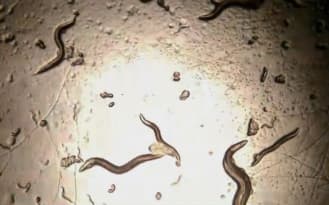
Parasitic worms, or helminths, continue to be a major public health concern worldwide, affecting millions of people, especially in low- and middle-income countries. These parasitic infections are often difficult to treat due to the development of drug resistance, limited treatment options, and the complexity of the parasites' life cycles. To develop new, effective anthelmintic agents, researchers must study the biology and pharmacology of helminths in depth. Among the many model organisms used in biomedical research, Caenorhabditis elegans (C. elegans), a free-living nematode, stands out as a powerful tool for advancing anthelmintics research. This essay will explore why C. elegans is an ideal model organism for studying helminth biology and screening for novel anthelmintic compounds.
Genetic Similarity to Parasitic Nematodes
C. elegans belongs to the phylum Nematoda, the same group of organisms that includes many parasitic nematodes responsible for human diseases such as hookworm, roundworm, and filariasis. This genetic relatedness is a key factor in using C. elegans for studying the biology and pharmacology of parasitic nematodes. Despite being a free-living species, C. elegans shares many physiological and molecular characteristics with its parasitic cousins, including the structure of its nervous system, digestive system, and musculature, which are crucial targets for anthelmintic drugs. Furthermore, the nematode's genes involved in processes such as metabolism, growth, and reproduction are highly conserved, making C. elegans an excellent model for investigating the molecular mechanisms of drug action and resistance.
High Reproducibility and Easy Maintenance
C. elegans has several practical advantages that make it a compelling choice for anthelmintics research. It has a rapid life cycle, with a generation time of just 3-4 days, allowing researchers to quickly assess the effects of drug treatments over multiple generations. This high reproductive rate enables large-scale screenings of potential anthelmintic compounds. In addition, C. elegans can be cultured in large quantities on simple agar plates with minimal resources, making it both cost-effective and easy to maintain in laboratory settings.
The worm's transparency throughout its life cycle allows for direct observation of biological processes, making it an invaluable tool for studying drug-induced changes at a cellular and tissue level. This transparency also facilitates the use of advanced imaging techniques to monitor the effects of anthelmintic drugs in real-time, providing insights into the drug's mechanism of action, side effects, and potential toxicity.
Genetic Tools for Functional Genomics
Another major advantage of using C. elegans in anthelmintic research is the wealth of genetic tools available for functional genomics. The genome of C. elegans has been fully sequenced, and it has been extensively studied in terms of gene function, regulation, and expression. This enables researchers to perform targeted knockdowns or knockouts of specific genes to explore their role in drug resistance or susceptibility. For example, by using RNA interference (RNAi), researchers can systematically inhibit the expression of individual genes to identify potential drug targets or assess how certain genes influence the efficacy of anthelmintic drugs.
In addition, the use of mutant strains of C. elegans, which have altered sensitivity to particular compounds, can help researchers understand the molecular pathways involved in drug action. These genetic insights are invaluable for identifying novel targets for drug development, enhancing the development of more effective and selective anthelmintics.
Screening for Anthelmintic Compounds
The ability to rapidly screen large libraries of potential anthelmintic compounds is crucial for drug discovery. C. elegans is particularly well-suited for this purpose due to its small size, ease of cultivation, and ability to survive and reproduce in controlled laboratory conditions. High-throughput screening techniques using C. elegans have been used successfully to identify compounds that show activity against parasitic nematodes. For example, in studies designed to identify novel anti-nematode agents, compounds that induce paralysis or inhibit reproduction in C. elegans may be further evaluated for their efficacy against more complex parasitic nematodes.
Moreover, the rapid assessment of compound toxicity in C. elegans provides an early indicator of a compound's safety profile. Since the worm shares many metabolic pathways with humans and other animals, testing in C. elegans can provide important insights into the potential toxicity or adverse effects of a compound before progressing to more expensive and time-consuming studies in higher animals.
Model for Studying Anthelmintic Resistance
A significant challenge in the treatment of parasitic nematode infections is the emergence of drug resistance. The development of resistance in parasitic worms is a major hurdle in controlling these diseases. C. elegans provides an ideal system for studying the mechanisms of anthelmintic resistance because of its short lifespan and genetic tractability. Researchers can expose C. elegans to sub-lethal doses of drugs over multiple generations to simulate the development of resistance in a controlled setting. This allows for the identification of specific genetic mutations or changes in gene expression that confer resistance to particular drugs.
Additionally, C. elegans offers the opportunity to study resistance in combination with other factors, such as environmental stressors or interactions with other organisms, which may influence the development and spread of resistance in parasitic nematodes. This knowledge is essential for designing strategies to combat drug resistance in parasitic worms and improve the long-term efficacy of anthelmintic treatments.
Ethical Considerations
While the use of animal models in research often raises ethical concerns, C. elegans offers a less controversial alternative due to its simplicity, lack of a central nervous system, and minimal consciousness. As a non-sentient organism, C. elegans is subject to fewer ethical restrictions than higher animals, making it an attractive model for researchers focused on drug discovery and development. Furthermore, the use of C. elegans reduces the need for more complex and costly animal studies in the early stages of drug development.
Conclusion
In conclusion, Caenorhabditis elegans offers numerous advantages as a model organism for anthelmintic research. Its genetic similarity to parasitic nematodes, ease of maintenance, and rapid life cycle make it an ideal tool for studying the biology of helminths and screening for new drugs. The wealth of genetic tools available for functional genomics and its capacity for high-throughput screening further enhance its value in anthelmintics research. Moreover, C. elegans provides an excellent platform for studying the development of anthelmintic resistance and testing novel drug candidates in an ethical, cost-effective manner. By continuing to leverage the power of C. elegans, researchers can accelerate the discovery of new anthelmintic agents, ultimately improving global efforts to combat parasitic nematode infections and reduce their impact on human health.